What Old Shows Can I Legally Upload?
Disclaimer: What yous're about to read is a compendium on fair use and copyrights pertaining to film and video production. I provide plenty of links and references to support the information. Merely information technology should not replace consulting an attorney with regard to your item situation.
What are copyrights and trademarks?
Simply put, a copyright protects literary and artistic assets such every bit books, movies, videos, plays songs, photographs, etc. Information technology should non be confused with a trademark which is a form of protection geared towards words and symbols. Trademarks are predominantly for the protection of a company's intellectual property surrounding its brands and logos.
Unless explicitly expressed, whoever creates an paradigm (photograph or video), owns the copyright to that epitome. Equally long as that image does non infringe on another pre-existing copyright. That is why it is so important for production companies to have contracts in place with both clients and subcontractors with regards to the videos or photographs they create.

What is Fair Use?
The laws and regulations around fair use and copyrights are among the almost confusing aspects of filmmaking. When tin can yous utilize a song, photo, or moving-picture show clip, etc., and exist inside the bounds of the law? And what about all those thousands of videos uploaded to YouTube and Vimeo every calendar week? How are they able to get away with what appear to exist copyrights violations?
Section 107
According to the U.S. Copyright Function, Off-white Use is "a legal doctrine that promotes freedom of expression past permitting the unlicensed use of copyright-protected works in certain circumstances . Section 107 of the Copyright Act provides the statutory framework for determining whether something is a fair apply and identifies certain types of uses—such as criticism, comment, news reporting, pedagogy, scholarship, and inquiry —as examples of activities that may qualify equally fair utilize. Section 107 calls for consideration of the post-obit 4 factors in evaluating a question of fair use:
- Purpose and graphic symbol of the utilize. Including whether the use is of a commercial nature or is for nonprofit educational purposes
- Nature of the copyrighted work (using parts of something more than artistic in nature, like a movie or volume, has a weaker "fair utilize" statement than news footage or a technical commodity).
- Amount and substantiality of the portion used in relation to the copyrighted work equally a whole (i.e. do you lot really need 3 whole minutes of "Avengers: Age of Ultron" in that video essay about superhero movies? Or will 3 seconds do?)
- Effect of the employ upon the potential market for or value of the copyrighted work (will the use hurt the original copyright holder's ability to make money from the work that was copied?).
The matter that makes fair use and then difficult is that it'south non a lucent constabulary. It'due south relatively open to estimation. Unless y'all're really sued or challenged, you lot may never know 100% whether your utilise adheres to the law or not. In court, it'south the ruling estimate's discretion based on his or her own interpretation of the police force.
Transformative Work
These 4 factors boil down into two important questions:
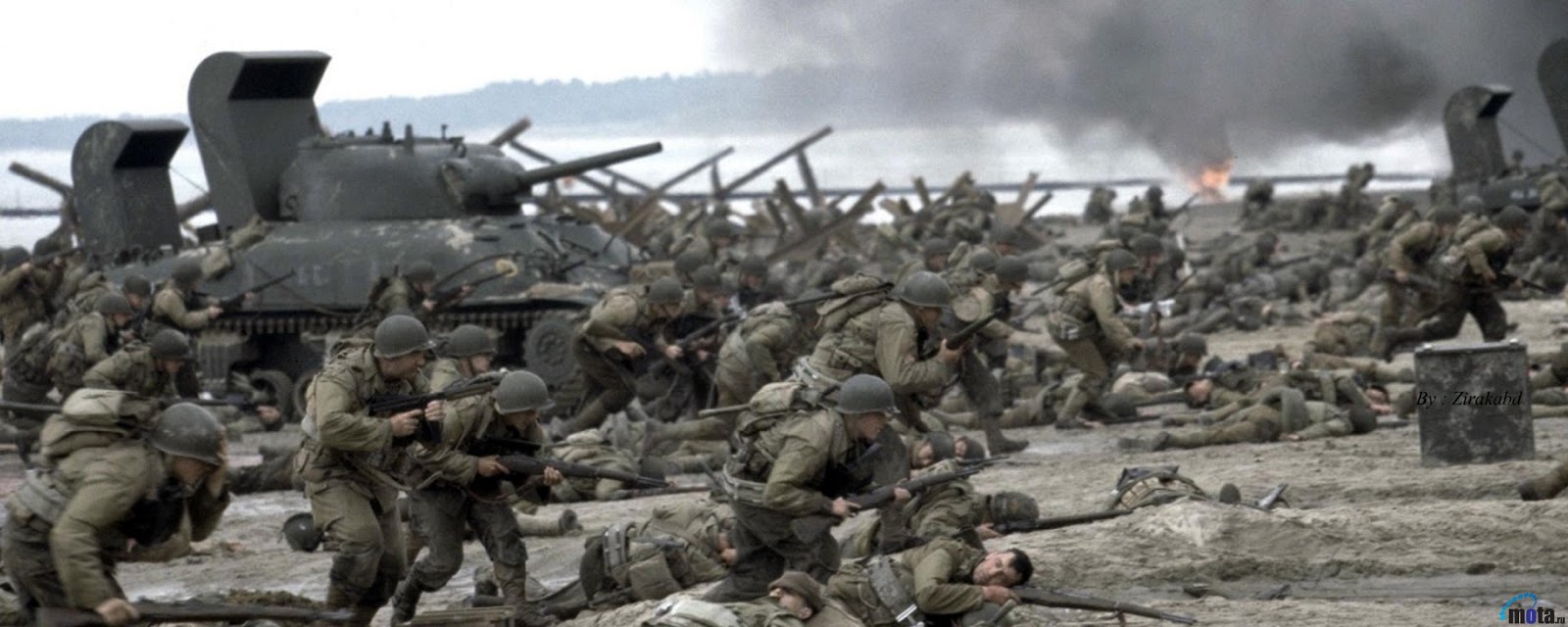
Showtime, are y'all repurposing the material for use in a fashion other than its original purpose? That is what information technology means for a piece of work to be transformative. This is a mutual term you volition hear in discussions of fair use. A classic example would be the use of a pic prune inside an educational context. A prune from Saving Private Ryan's opening scene in a video essay on how Spielberg uses cinema verité is transformative. You're taking the original media (a slice of entertainment) and using it for instruction.
Is it off-white?
Nevertheless, if yous took those same clips and dropped them into your WWII brusque film for the express purpose of being a battle scene, well, in the words of Andrew Garfield to Jesse Eisenberg'southward inThe Social Network, "Lawyer up!"
The second question to ask is, "If your use is transformative, are you using the appropriate amount for that transformative purpose?" Ordinarily, this amount is a small percentage of the whole. In the above case of using clips from Saving Private Ryan, you could probably justify every bit much as 30 seconds to adequately show employ of cinema verité. Still, if you uploaded the entire movie to your "education channel," and yous only had a few random vocalism-over commentaries about color grading or cinematography, that would be a harder fair use argument to support.
The fab 4
F our uses of copyrighted material are particularly addressed and often protected by fair utilise: commentary, criticism, education, and news. So satires, parodies, video essays, documentaries, etc., will usually be protected by off-white use. Nonetheless, your interpretation of "pedagogy" my not exist the same as a estimate's. Lots of videos are uploaded to YouTube with a disclaimer like "This video is uploaded for educational purposes."
But it's just the full video with no transformative aspect. (Sad buddy, that doesn't cut it.)
Call back, fair use is the kind of law wherein a transgression isn't definitively determined until later on the fact (i.e. you become sued). Information technology'southward not like running a red light or shooting a person in cold blood. These are acts that you know are illegal beforehand. So invoking "fair apply," leaves you open to litigation if there are no expressed licenses in place. That'southward just a cold difficult truth.
With that said, you don't have to be gun-shy about it. There are resources and past precedents in place wherein you can feel confident in your application of fair apply. We'll get to those later.
The DMCA
No discussion of copyrights and fair use in filmmaking would be consummate without addressing to some extent the Digital Millennium Copyright Act (DMCA). This was a law signed past President Pecker Clinton on October 12, 1998 that implements two treaties past the Globe Intellectual Property Organization (WIPO). The law is detailed and contains five titles. In short, and paraphrasing Wikipedia speak, "It criminalizes production and broadcasting of technology, devices, or services intended to circumvent digital rights management (DRM)."
These are the technologies used to admission copyrighted digital media such equally computer programs, movies, etc. A cardinal aspect is this. DMCA is the limitation of liability for internet companies with regards to copyrighted works distributed on the internet. In other words, sites like YouTube and Vimeo aren't liable for violations by people who use their services. As long as they respond immediately to copyright holders' requests for action against violators. Nosotros'll address this later as well.
Documentary Filmmakers' Statement of Best Practices
I've studied and written about the topic of off-white use a number of times in the past. A yr ago I had the opportunity to interview Patricia ("Pat") Aufderheide, i of the co-founders for the Center for Media and Social Impact. This is a non-profit organization, based in Washington D.C. It fights for universal copyright and fair use standards for films, videos, photographs, and fifty-fifty podcasts and radio.
My interview was function 2 of a 2-office podcast series on Fair Apply in Filmmaking. (You can hear my full interview with her here). CMSI has worked with legal scholars and media professionals to create a serial of PDFs. These aim to standardize fair usage and provide a centralized resource for media makers. One of the documents is The Documentary Filmmakers' Argument of Best Practices in Fair Use. Pat specifically worked with one of the globe'due south most renowned experts on off-white use, Peter Jaszi, to put this document together.
Driving force
The primary impetus for Pat and Peter creating this document (and leading the research to create information technology) was their discovery of the number of documentary filmmakers who were avoiding the usage of cloth they believed would put them at adventure. Some recurring refrains from documentary filmmakers included: don't comprehend any topics related to popular music; don't cover any politics that would require you to employ news footage; don't cover anything related to pop culture; etc.
All of these topics would require huge clearance budgets, some fifty-fifty greater than the budgets of the entire films themselves. Every bit Pat puts it, "Filmmakers aren't waiting for people to censor them. They're just going alee and doing it to themselves."
Based on these findings, Pat and Peter got funding from the Rockefeller and MacArthur Foundations. This was used to fund the extended enquiry and creation of the argument of best practices.
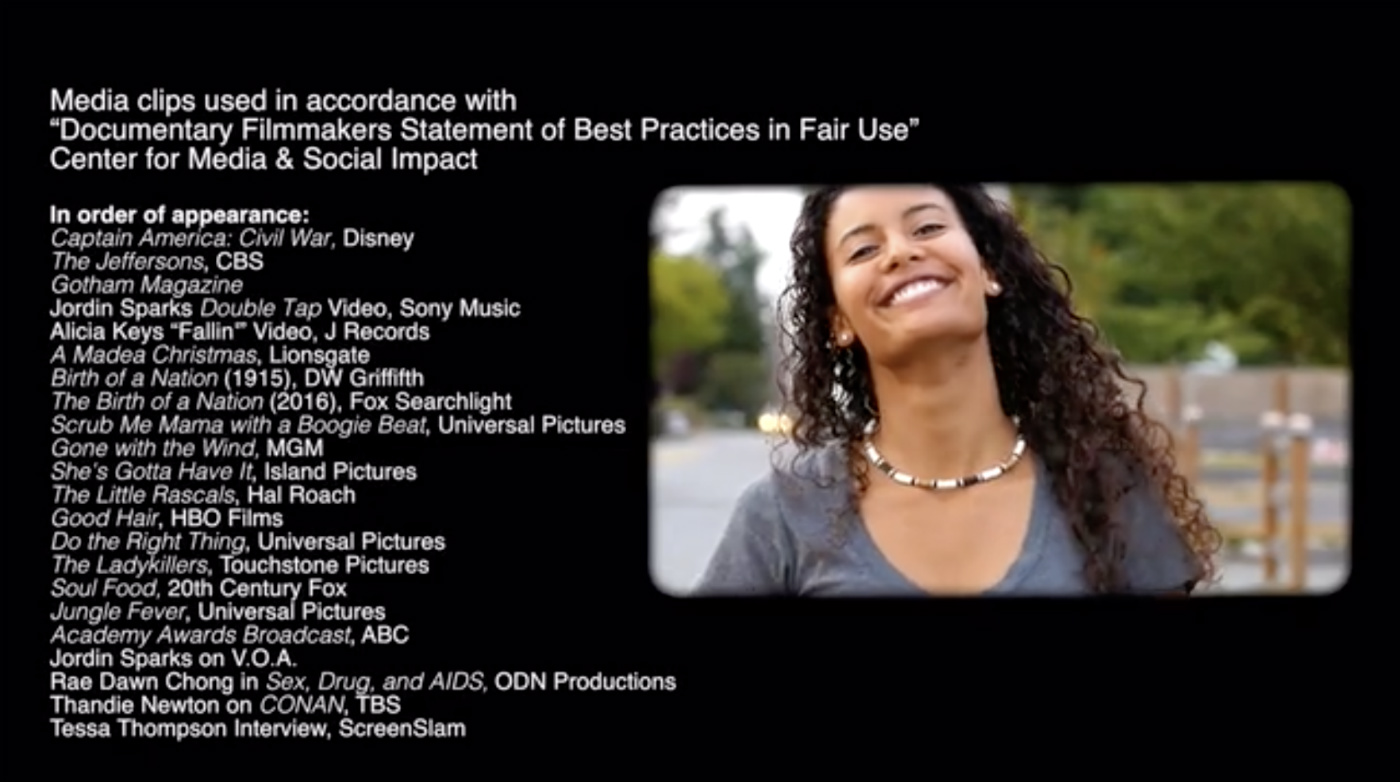
The beauty of the argument of best practices is that it was created in conjunction with working feature motion picture documentary filmmakers and the world'south leading legal scholars, to define, in uncomplicated words, what kinds of uses of copyright works fall under off-white use. I used and referenced it in the making of my short film documentary "Mixed in America: Trivial Mixed Sunshine."
I even had Pat watch the short to get her have on it. The prologue, in item, contains a number of clips from music videos, onetime movies, and gimmicky movies. Aslope the credits for the clips used, I also reference the Off-white Use statement. So technically, could Disney or HBO come afterward me? Yes. But I followed the guidelines and went the actress mile to credit the clips used. Then, I'g not losing whatever sleep over the "Mouse House" giving me a telephone call.
The Big V Filmmaking Scenarios
Now I desire to address the meridian five areas where filmmakers come across problem when using other people'due south copyrights. This is based on my discussion with Pat and additional research. I'll be using a combination of example studies where copyright violators went afoul of the respective copyright holders. And cases where the fair use appears to be categorically intact.
We're also planning to produce some more manufactures on the business side of filmmaking.
Trademarks and logos
You lot know how some reality Television receiver shows blur out the logos on wearing apparel? I used to think that was because the reality show didn't want to give costless advertising to the brand. Only that is not the case. It turns out that it's because of copyrights.
The first part of my aforementioned podcast 2-part interview was with New York documentary filmmaker Salima Koroma. I was interviewing her for something completely different, and I asked her how her morning time was going. (You know, regular pre-interview chit chat.) She said it was hectic because she was meeting with her lawyers to get over all the clearances she had to go dorsum and get for her documentary "Bad Rap." Clearances she had no thought were needed. This pre-interview "pocket-size talk" led into a 15+ minute chat that became its ain separate episode.
For example, there's a shot of Times Square in her film. In the groundwork are all of these logos, musical posters, billboards, etc. According to Salima's attorneys, they ALL needed clearances.
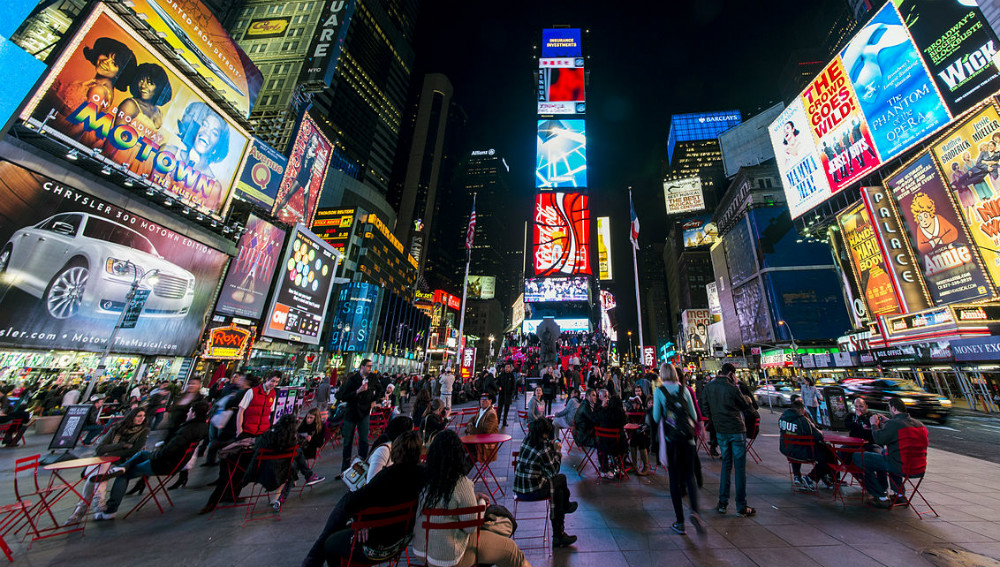
This seemed crazy to me. If anything seemed to fit under fair employ, a 2-2d shot of "The Lion King" billboard in the groundwork of a documentary seemed information technology. Not only was information technology brief, but it was also incidental. These types of occurrence helped to inspire the work backside the CMSI-created certificate of all-time practices. Salima's attorney'due south response was that information technology'due south amend to exist condom than sorry and get the clearances. Even if something technically fits under "off-white utilise."
Images
In 2011 I participated in The 48 Hour Picture Project. To this 24-hour interval it remains the most challenging and ane of the nigh rewarding filmmaking experiences of my life. One of the rules of the festival was making sure yous had clearances for whatsoever copyrighted material in your flick. Including paintings and photographs.
"But Ron, didn't y'all allude to the fact that incidental appearances of copyrights or trademarks might be okay?" That is truthful. Simply 1) these weren't documentaries nosotros're making, they were narrative pieces of fiction. And 2) the 48HFP distributes the winning films online and internationally. So they're covering themselves. And in case you're wondering, no, my film didn't win. We missed the borderline by 30 minutes because needed to re-export the project.
Stock photos and footage
But it's just non the utilise of photographs or paintings equally incidental appearances you need to be mindful of. If you're using them in the video (i.east. y'all're dropping the prototype on your NLE timeline), you lot demand to make sure you accept clearances. There are many resources for legally licensing stock photos and footage (eastward.chiliad. Pond5, Getty Images, Video Blocks, and Shutterstock, to proper name a few).
There are as well enough of resources to obtain gratis stock imagery. Sites similar Unsplash and StockSnap accept utilized Artistic Commons Aught licenses. This is the most permissive of the creative eatables licenses (see below for the full clarification of Creative Commons). It'due south essentially just 1 "notch" beneath the public domain. A CC0 license allows you to use the copyrighted piece of work any way you want. Without the need to even credit the copyright holder. I've ofttimes used Pixabay to find free stock video footage. (Proceed in mind, you get what you pay for.)
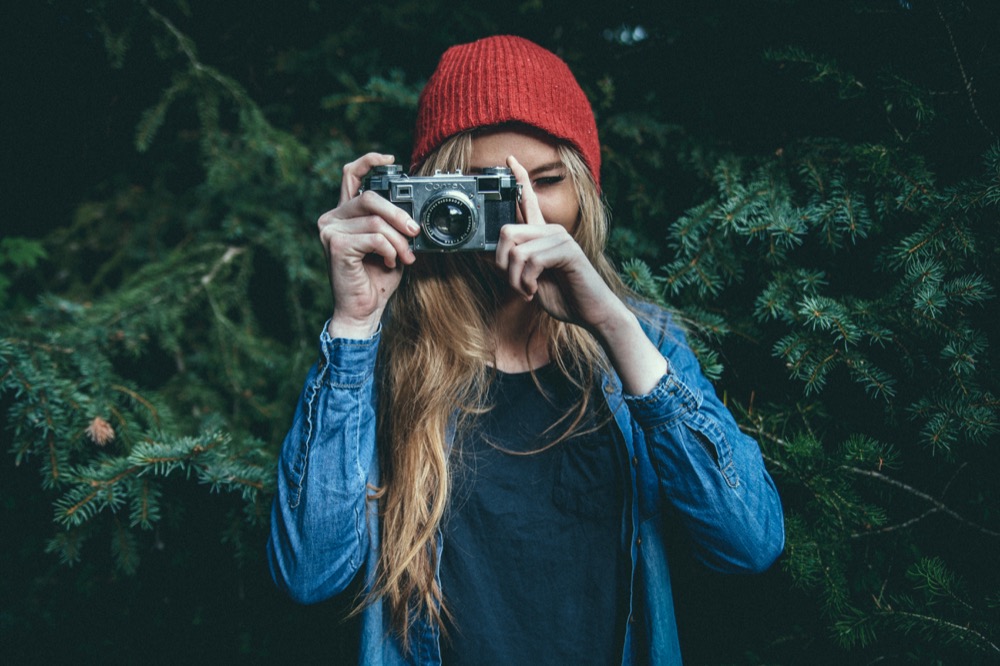
Movie and tv clips
Equally I mentioned to a higher place, I used clips from various movies and TV shows for my brusque film documentary. Possibly the near mutual area where you lot might come across this case of fair employ is in video essays. Essayists like Tony Zhou ("Every Frame a Painting") and Evan Puschak ("Nerdwriter") garner millions of views from their respective video essays. And they all include movie clips, photographs, television clips, and in some cases, even music.
All the same, YouTube has non invoked DMCA rules to take their videos down. And, on meridian of that, these guys are making thousands of dollars per video (as of this writing, Tony's Patreon entrada for "Every Frame a Painting" yields over $7,700 per video).
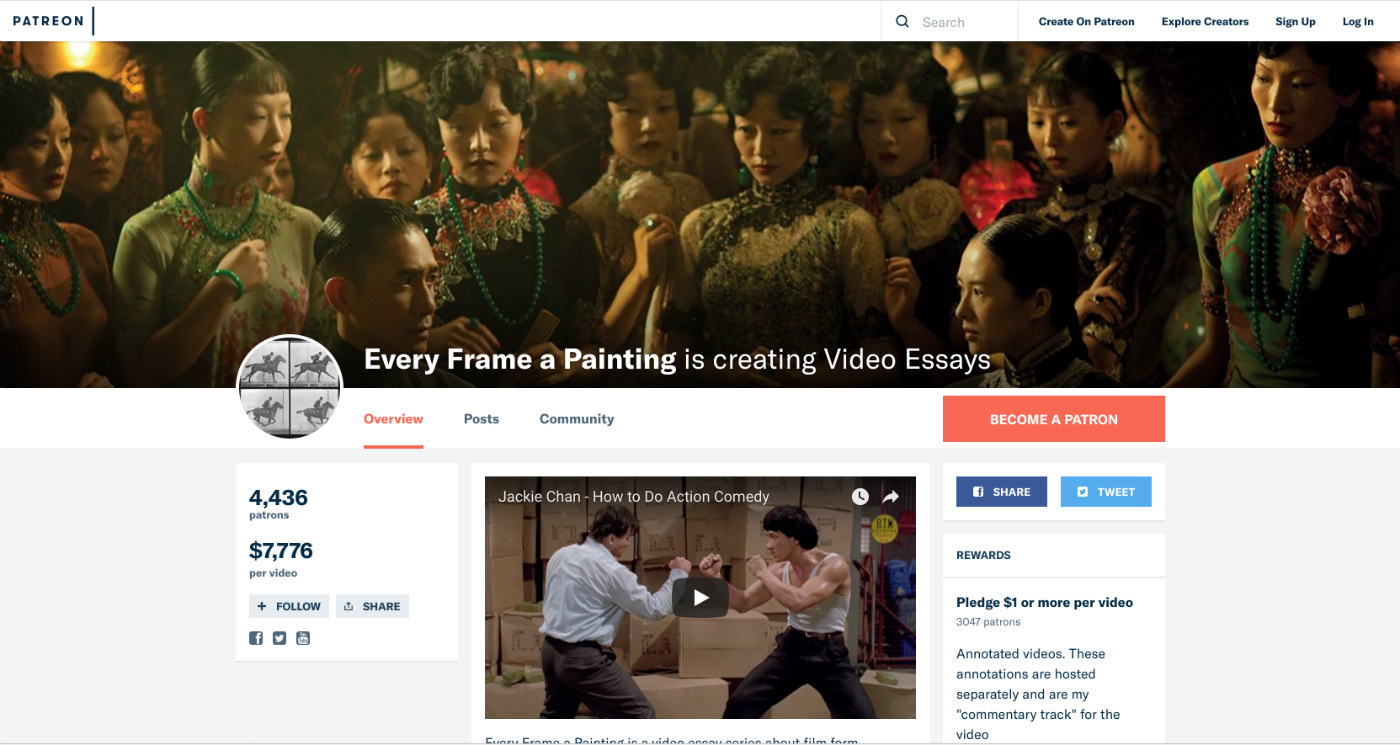
One of the tests for fair employ adherence is whether the copyrighted material is used for commercial proceeds. Information technology'south clear here that these guys have a commercial benefit from their use. Evan not just makes a few yard dollars per video from his Patreon, but he likewise gets corporate sponsorship from companies like Squarespace.
In essence
But video essays are the quintessential instance of fair use in terms of both education and critical commentary. That is the essence of a video essay. Based on the transformative use, the corporeality of the copyrighted cloth used, and the fact that this use is not hurting the commercial viability of the copyright holders, they're protected.
Now, I cannot say for 100% certain those guys don't actually have licenses with all parties whose copyrighted works are being used. But, I'thousand going to go out on a limb and say that a guy from Philly making videos in his living room and earning $3,000 per video has not paid licensing fees to a dozen or and then different conglomerates.
I have some other perfect instance of this usage where I do know for sure the filmmaker did non have license or permission.
Kirby Ferguson is the filmmaker behind "Everything's a Remix."
This short film series has garnered millions of views and Kirby has even spoken on the TED phase. Back in 2010 I interviewed him for one of my older podcasts, and I later contacted him about his utilise of Tarantino movie clips, also as music usage (where he used parts of famous songs to illustrate, coincidentally, how musicians sample songs). Kirby told me he did not get permission from the studios or labels to use those clips.
Y'all know what he did exercise? He followed the guidelines of the CMSI'south The Documentary Filmmakers' Argument of All-time Practices in Fair Use. In fact, he was the first person to ever refer me to the work of Pat and the CMSI.
Intellectual Property
Intellectual Property (or "IP") is a physically intangible item of value based on ideas, figurer code, trademarks, copyrighted stories and characters, etc. For many companies, their IP is their primary production. So, it stands to reason, they go out of their way to protect that IP.
But filmmakers are nerds. (Yous're reading an article by a huge one. A nerd that is). And we honey our sci-fi and fantasy. Hence the fan film.
Fan service
YouTube contains tens of thousands of fan films. Media created by fans of a slice of IP wherein they use that IP to make their own films. (Some have jokingly argued that this season of "Game of Thrones" is a glorified "fan movie" vs. an adaptation because George R.R. Martin hasn't finished the final two books in his famous Song of Ice and Fire serial upon which the HBO series is based. Simply, again, don't get me started.)
Based on my understanding of off-white apply and copyright law, only about every single instance of a fan movie is a copyright violation. They are non necessarily making money from these films; but for the almost office, the films are not making any kind of commentary or critique on the IP. They are not transformative in purpose either (i.e. pedagogy). They are amusement for entertainment'south sake, merely like the original IP.
Now, some IP holders encourage fan films and permit a vibrant fan film community to flourish. Fan films proceed the culture alive and fans excited about the traditional IP. Lucasfilm is a perfect example of that in how they've responded to and embraced the "Star Wars" fan film community. (One of the most celebrated "Star Wars" fan films recently was terminal year's "Darth Maul – Apprentice" with over xiv million views as of this writing.)
However, some IP holders of sci-fi space stories are not every bit forgiving.
The Battle of Axanar
Earlier this twelvemonth, later a legal battle that lasted nearly a year, Paramount Pictures and CBS (the owners of "Star Trek") won a judgment confronting Axanar Productions. Axanar had raised over $1 million in crowdfunding to produce a characteristic-length version of it's popular short film "Prelude to Axanar." Axanar claimed fair employ. A U.S. district court estimate said no.
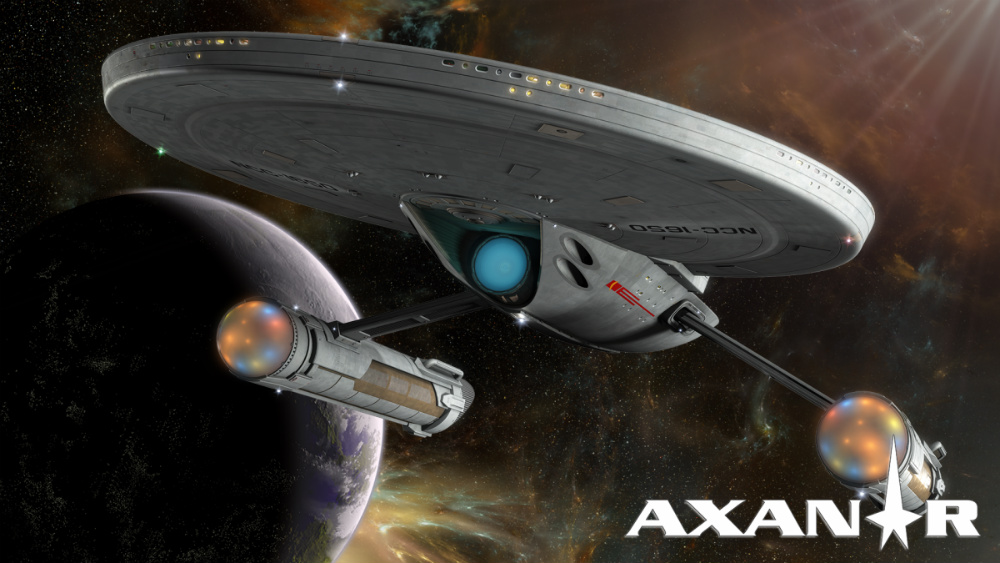
Axanar and CBS/Paramount somewhen reached a settlement whereby Axanar agreed to substantially change the length and content of their film (which naturally put them in a chip of a bind equally they raised over a million dollars to make a feature).
What made this case particularly stand up out was the fact that in that location have been "Star Expedition" fan films literally for decades. Dating dorsum as early equally the 80s. Even Axanar'south original film "Prelude to Axanar" was made with no objection from CBS/Paramount and as of this writing has over iii million views.
Don't get them started
What set the studio off, in this case, was the scope of this new project. In addition to the feature-length and the $one million+ upkeep, it stars well-known actors similar Richard Hatch (Apollo from the original "Battlestar Galactica" and Tom Sarek in the SyFy Channel remake), Gary Graham, and Kate Vernon (also from SyFy's "BSG"). In the eyes of CBS/Paramount, the feature-length fan picture with those production values and cast, was too much. (especially with the new "Star Expedition: Discovery" serial on the horizon).
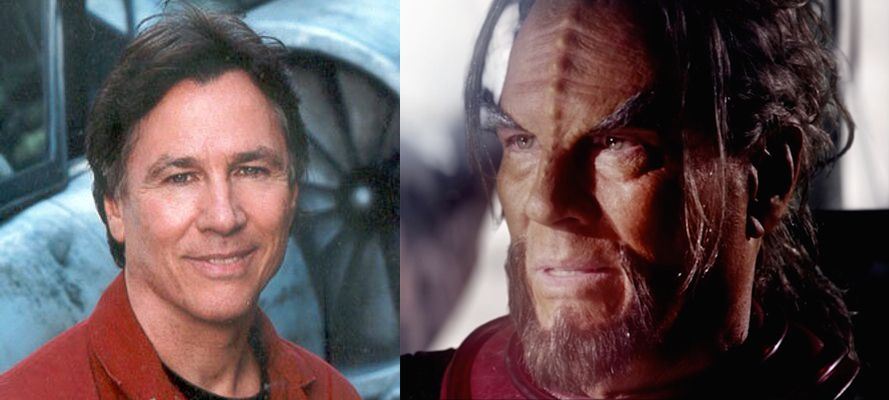
Richard Hatch (who sadly passed abroad this past February) played a Klingon commander in the Axanar serial.
The uproar from the fans was huge. Needless to say, they were pissed. The fan community is what kept "Star Expedition" live, going as far back as the 70s. So many saw this lawsuit every bit an affront on the fan loyalty and devotion to the franchise.
In an endeavor to support the fan film community and encourage the continued production of fam films, CBS/Paramount created a ready of guidelines for future fan film productions. They put limits on things like the amount of money raised (must exist less than $l,000), the running fourth dimension (less than xv minutes), and that films must star and be produced past amateurs. Many feel that those guidelines are too limiting. Simply time will tell how it all plays out.
The Wrath of Kahn
Joseph Kahn is one of the near prolific music video filmmakers on the planet. He is the become-to guy for Taylor Swift. He's insanely talented and has the attitude to match.
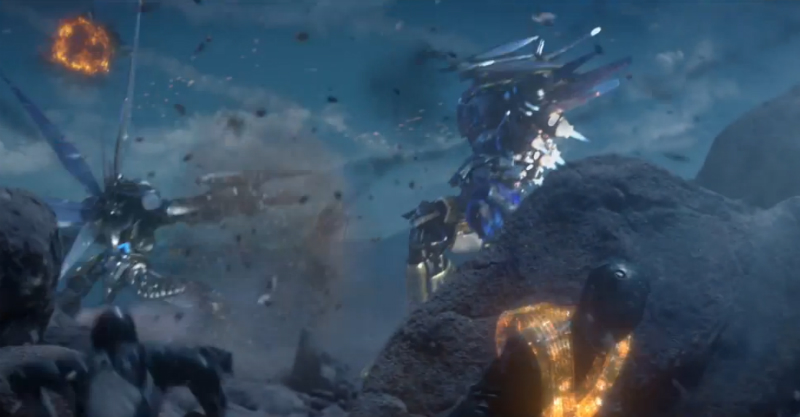
Virtually 2.5 years agone, he and producer Adi Shankar released what some have described equally the most epic Power Rangers moving picture ever made. Based on the popular children's series owned by Saban Amusement, Kahn and Shankar's version is night, gritty, and absolutely Not FOR KIDS. This is due to sex activity, graphic violence, drug use, language, dark themes—pretty much everything you lot can put in a movie that makes it NSFW.
Recognizable talent
The production values are top-notch, from the CGI to the choreography; and even the acting is very skilful. Information technology too stars well-known actors, namely Katee Sackhoff (yet another SyFy BSG alum), and "Dawson" from the WB striking "Dawson's Creek", James Van Der Beek.
A quick response
It did non have long for the curt to go viral. Saban, who at the time was in pre-product for a new Power Rangers film (released terminal year), ordered to have the video removed from Vimeo. Kahn was pissed.
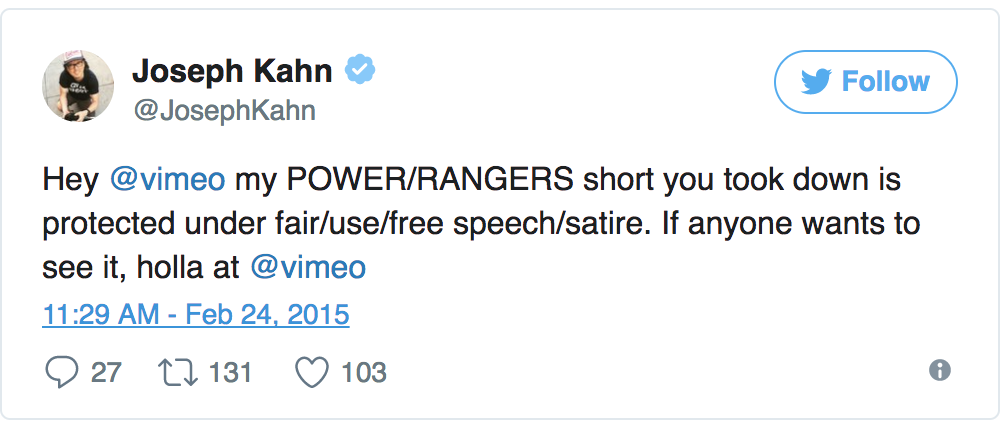
Remember the DMCA I mentioned above? This is where it came into action. Under the regulations of the DMCA, Vimeo was required past police force to remove information technology at the bidding of Saban. And they retorted as such to Kahn on Twitter.
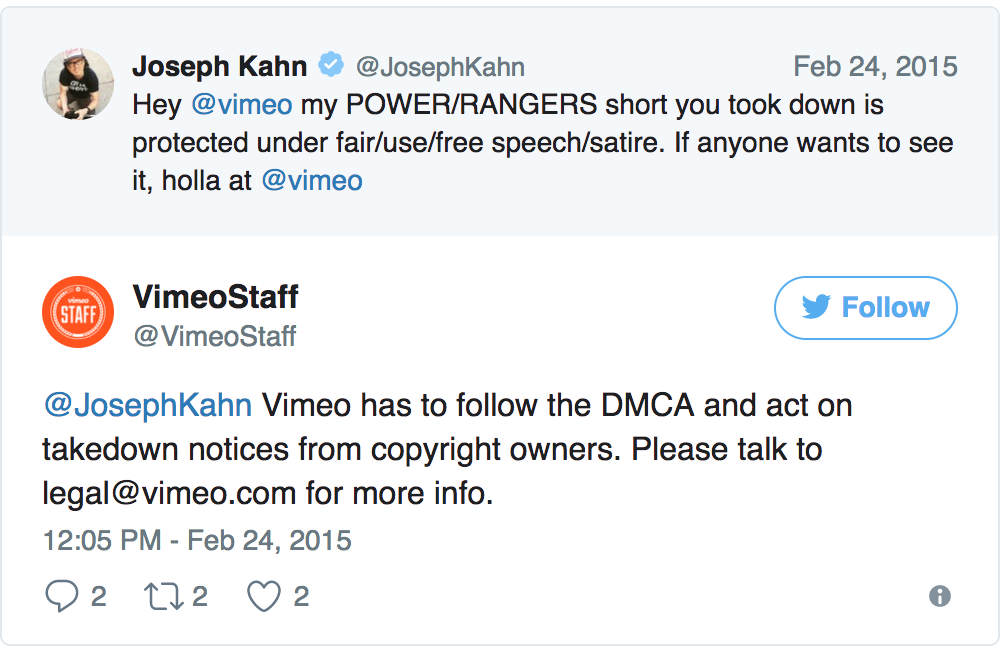
They released a formal statement on their blog where they said:
"The video creator feels that the video is covered by Fair Use based on the fact that information technology is not-commercial and satirical. We agree that an argument for fair employ can be fabricated, simply the DMCA law does not give content hosts (like Vimeo) permission to condone a takedown notice simply considering of the presence of i or more fair use factors. This is a legal matter betwixt the copyright holder and the video creator."
Making a instance
Kahn and Shankar were making the case that this video falls under Off-white Apply considering they were non making any coin from it, and they saw information technology as a satirical commentary on kids and violence. IMHO, I called B.S. on both, and I think Saban had a strong case against Kahn regarding this film.
- Kahn may not take been paid for the picture, merely you don't have to be a Harvard business organization graduate to know that a moving picture like this, and the publicity it was getting, volition be worth more than to him long-term than any director fee he would've earned. Filmmakers brand these kinds of films all the time precisely for the marketing value they bring. All an chaser has to practise is add up the press impressions Kahn had gotten on sites like Mashable, i09, HitFlix, and pretty much every major tech, sci-fi and movie website and calculate what ads on those sites would price to come up up with a effigy.
- It'due south obviously non an educational or "news" item.
- Lastly, I don't think this kind of film really qualifies as a "commentary" on Power Rangers, or fifty-fifty a parody. It is a serious drama using the characters from the universe. In Kahn'southward ain words, he made it because he wanted to see a "good" Ability Rangers flick; non every bit a critique or commentary. Shankar released a video which gives his reasons why he made it. But the comedic nature of this video clearly shows at that place was no sincere desire to brand a serious commentary virtually children and violence. At the end of the mean solar day, they wanted to brand a kick-donkey Power Rangers motion-picture show. And without a doubt, they did.
Split conclusion
I loved that Power Rangers "fan moving-picture show." It was truly a curiosity. But it really wasn't fair utilise. As fan fiction, few reach the level of sophistication of the Kahn moving-picture show. Merely if that fiction goes against the brand of the art in question, the copyright holder should have the right to have it removed, no matter how abrasive or frustrating it might be even to the very fans for which it was made. IMHO, we equally artists should actually be defending that right, not fighting confronting it (every bit many people did when Vimeo first took it downwards).
Ultimately Saban and Shankar/Kahn reached an understanding to reinstate the film if a disclaimer was added. I actually recollect that's was pretty generous on the side of Saban. (And based on the dismal performance of their official Power Rangers motion picture, they may want to look into Kahn doing a feature-length version of his fan movie. One that is more kid-friendly, of course).
Music
The last of the big five areas of fair employ scenarios for filmmakers I want to cover is music. Oh boy. This volition exist fun.
No area of confusion on this event is possibly more misunderstood than music. You demand await no farther than the hundreds (if not thousands) of professionally shot wedding videos edited with copyrighted music. Or the countless epic short films on YouTube with Hans Zimmer or Michael Giacchino "scores." Many novice filmmakers presume that if a video is "not for commercial purposes" and/or if the music was purchased on iTunes, then that clears them or their conscience. Unfortunately, information technology doesn't (well, information technology may clear their conscience, only it definitely doesn't clear them legally).
Inside parameters
Music does indeed autumn nether off-white use, and then your use of it must also fit within the parameters mentioned above. The problem is, most of the use of music in such film and video is a copyright violation. They use someone else's music, unlicensed, in the manner for which it was originally purposed. There is no transformative utilize or commentary on the music itself.
In gild to legally employ music in your film or video, you need two types of licenses: a principal (likewise known as mechanical) use license (controlled past the record label) and a synchronization (or sync) license (controlled past the publisher). The mechanical use license gives yous rights to the song from the originator; the sync license gives you the right to the specific version of the song and set information technology to a film or video. In many cases, the same company represents the publisher and the characterization. Only if they don't, you'd have to suit for licenses with each entity separately.
Years ago, The Harry Pull a fast one on Agency was a centralized resource for getting all the appropriate licenses for use in films. They accept since given upwardly managing sync licenses and focus on mechanical employ licenses.
Raising the stakes
Within the past vii years, tape companies take raised the stakes when it comes to illegally using their music. Ii wedding videographers I know personally had rather high-contour public lawsuits by EMI when hymeneals videos they produced for celebrities went viral. As most wedding videos do, theirs had copyrighted music. Each settled out of court for amounts in the 5-figure range; that's A LOT of money for a small hymeneals filmmaker to shell out. If you lot are a wedding and consequence videographer, don't risk it. Fortunately, there are alternatives to using music illegally.
Music License Alternatives
Unless you have a huge upkeep, you will not be able to get popular music for that really absurd short moving-picture show or characteristic film. Thankfully, at that place is a growing number of sites where y'all can legally license music from a wide variety genres. Some of these sites even accept mainstream popular music.
The length and price of the license will depend on factors such every bit the intended audience (nuptials, corporate, personal), the size of the audience, and the intended distribution (theatrical, online, DVD/Blu-ray, circulate). For theatrically-released features, you will typically need to accommodate some sort of custom license (which undoubtedly volition cost you an arm and a leg).
Royalty-free? Or rights-managed?
The virtually important thing to keep in listen is that some of these sites accept royalty-costless licenses, and others accept what'due south called "rights-managed" licenses.
- Royalty-free is essentially "buy one time, use indefinitely." You tin use royalty-free songs in merely about all manners of product, for as many productions, for every bit long as you lot like. A few of the most popular royalty complimentary sites I'g familiar with include Pond5, PremiumBeat, and AudioJungle. You'll notice that the rates on these sites can exist as trivial as $12 to $40.
- Rights Managed licenses are more restrictive. They are typically for one song and i product. Whereas royalty-free sites have one price per song, rights-managed sites will alter the price based on the license. The same vocal my toll $sixty for apply in a nuptials video, but $500 if used in a local cable TV commercial, or a corporate promo video for a company with 50 or more employees. The rights managed sites I come across more often are Marmoset Music, Song Freedom (now FyrFly), MusicBed, and Triple Scoop Music.
As an avid podcaster who pretty much does it as a passion project, I don't accept the budget to license music for the episodes I produce. And then I've turned to a resource that is not only great for music but applicable to all forms of copyrights: creative commons.
Creative Commons
Creative Eatables is an arrangement dedicated to providing worldwide licensing for copyright holders who want the ability to freely and hands license their work to others. When yous use a copyrighted piece of work under Creative Commons, you concord to one of vi types of licenses.
Creative Eatables licenses
- Attribution (CC BY): This license lets others distribute, remix, tweak, and build upon the copyright holder's work, fifty-fifty commercially, as long equally they give credit for the original creation.
- Attribution-ShareAlike (CC BY-SA): This license lets others remix, tweak, and build upon the copyright holder's work, even for commercial purposes, as long as they requite credit and license their new creations under the identical terms. All new works will carry the same license, and so any derivatives will likewise permit commercial use. This is the license used by Wikipedia and is recommended for materials that would benefit from incorporating content from Wikipedia and similarly licensed projects.
- Attribution-NoDerivs (CC Past-ND): This license allows for redistribution, commercial and non-commercial, as long as it is passed forth unchanged and in whole, with credit to the copyright holder.
- Attribution-NonCommercial (CC BY-NC): This license lets others remix, tweak, and build upon the copyright holder'due south piece of work not-commercially, and although their new works must also acknowledge the copyright holder and be not-commercial, they don't have to license their derivative works on the same terms.
- Attribution-NonCommercial-ShareAlike (CC BY-NC-SA): This license lets others remix, tweak, and build upon the copyright holder'due south piece of work non-commercially, equally long as they give credit and license their new creations under the identical terms.
- Attribution-NonCommercial-NoDerivs (CC BY-NC-ND): This license is the most restrictive, merely allowing others to download the copyright holder's works and share them with others every bit long as they requite credit. They can't change them in any way or apply them commercially.
Every bit I mentioned earlier, I utilize CC music in my podcasts, but I also used it in my documentary brusque.
Artistic Eatables does extremely important piece of work. It allows content creators to share and utilise copyrighted cloth in a way that is fair and equitable to both the copyright holders and the users of those copyrights. You can acquire more most them at CreativeCommons.org.
C.Y.A.
As a filmmaker (documentary or otherwise) who wants to use other people's copyrights in your work, in that location are a number of things you can do to protect yourself:
- Utilize the Statement of Best Practices: When CMSI did a study 2 years ago of documentary films over the previous ten years that had implemented the guidelines of fair use outlined in this document, they institute the overwhelming majority of them had no problems with broadcasters, insurers, or lawyers.
- Where budgets let, get ahead and get the clearance. You may recall my recent interview with the editors of HBO's documentary series "The Defiant Ones", about the careers of Dr. Dre and Jimmy Iovine. The music licensing budget for that four-part series was the highest in HBO's history.
- CC Yourself: when looking for music, photos, or even stock footage for your video needs, if you lot don't take the budget, outset with Creative Commons sites. You can fifty-fifty start your search directly from the CC Search Engine.
I've tried to give you an exhaustive listing of resources and example studies related to fair use and copyright usage so that moving forward, you can make informed decisions. But I'm sure at that place are other resources I may accept missed. What are some of your favorite sites for finding and using copyrighted textile legally in productions? Please share.
[Header image Photo by Claire Anderson on Unsplash]
Source: https://blog.frame.io/2017/08/30/copyrights-and-fair-use-for-filmmakers/
0 Response to "What Old Shows Can I Legally Upload?"
Post a Comment